Digital marketing often feels complicated for small business owners. New platforms, changing algorithms, and constant advice can make it hard to know where to start.
The good news is you do not have to do everything at once. With a few strong fundamentals and the right channels for your current stage, you can build an online presence that supports your business without exhausting you.
1. What digital marketing really is (for small businesses)
Digital marketing is simply how you use online channels to help customers discover, trust, and choose your business.
For small businesses, this usually includes your website, search engines (SEO), social media, email, and local listings/reviews.
Website: your online storefront and information hub that is open 24/7.
Search (SEO): helping people find you when they search for services or products like yours.
Social media: showing up where your customers already spend their time.
Email: maintaining relationships with people who have already shown interest.
Reviews and local listings: building trust when people compare options.
2. Start with clear goals and a simple picture of your audience
Digital marketing works much better when you know what you want to achieve and who you are talking to.
Without clear goals and a defined audience, it is easy to spread your energy across too many tactics that do not really move the business forward.
Choose one or two measurable goals for the next 90 days, such as “20 qualified enquiries per month” or “50 new email subscribers”.
Describe your ideal customer: who they are, what they care about, and where they usually spend time online.
Decide on one primary action you want people to take when they see your brand (call, form, booking, or purchase). Every channel should point toward this.
3. Build a digital foundation before chasing too many trends
Successful strategies for small businesses almost always start with a solid foundation, then add channels one by one.
This foundation makes all your other marketing activities more effective and easier to measure.
Create or improve a fast, mobile-friendly website that clearly explains what you do and how to contact you.
Claim and complete your Google Business Profile and other important local listings.
Set up basic analytics (such as Google Analytics) to track visits and key actions.
4. Choose one or two main channels to start with
You do not need to be everywhere. For most small businesses, it is far more effective to focus on one or two channels and be consistent there.
Pick channels based on where your audience is and what you are good at.
If customers mainly search on Google, focus on SEO and helpful blog content.
If they are active on Instagram or Facebook, focus on regular, useful, and relevant posts.
If you have a customer list, start simple email campaigns with updates, tips, and offers.
5. Create simple content that solves real problems
Content does not need to be complicated to work. It needs to be relevant, helpful, and consistent.
Think of content as small, repeatable pieces that answer questions your customers actually have.
List 10–20 common questions or objections you hear from customers, and turn each one into a post, article, or short video.
Use clear language, show real examples, and always end with a next step (CTA).
Reuse your best content across formats: blog, email, social media, and short clips.
6. Test small campaigns and learn from the data
Digital marketing becomes powerful when you treat it as a series of small experiments, not one big bet.
Small tests help you discover what works without spending too much budget.
Run low-budget ad campaigns (for example, a few dollars per day) to test audiences and messages.
Focus on tracking metrics that truly matter, such as leads, bookings, or sales — not just likes or impressions.
Stop tactics that do not move your goals and increase the ones that clearly produce results.
7. Build a light, sustainable system
The best digital marketing strategy for a small business is one you can run for 12–24 months, not just a few weeks.
That usually means a simple system, clear routines, and a willingness to improve little by little.
Schedule small, regular blocks of time each week for marketing tasks that are realistic for you.
Automate what can be automated (such as email sequences or social scheduling) once the foundation is working.
Review results every month, adjust one or two things, and keep learning from the data.
Conclusion: Focus on a few fundamentals that fit your business
Digital marketing for small businesses does not have to feel heavy. When you understand your goals, audience, and strengths, you can build a simple strategy on a strong foundation, with one or two main channels and content that genuinely helps.
Start with small steps, learn from each experiment, and build a system you can keep running. Over time, those consistent actions will usually have more impact than chasing short-lived marketing trends.
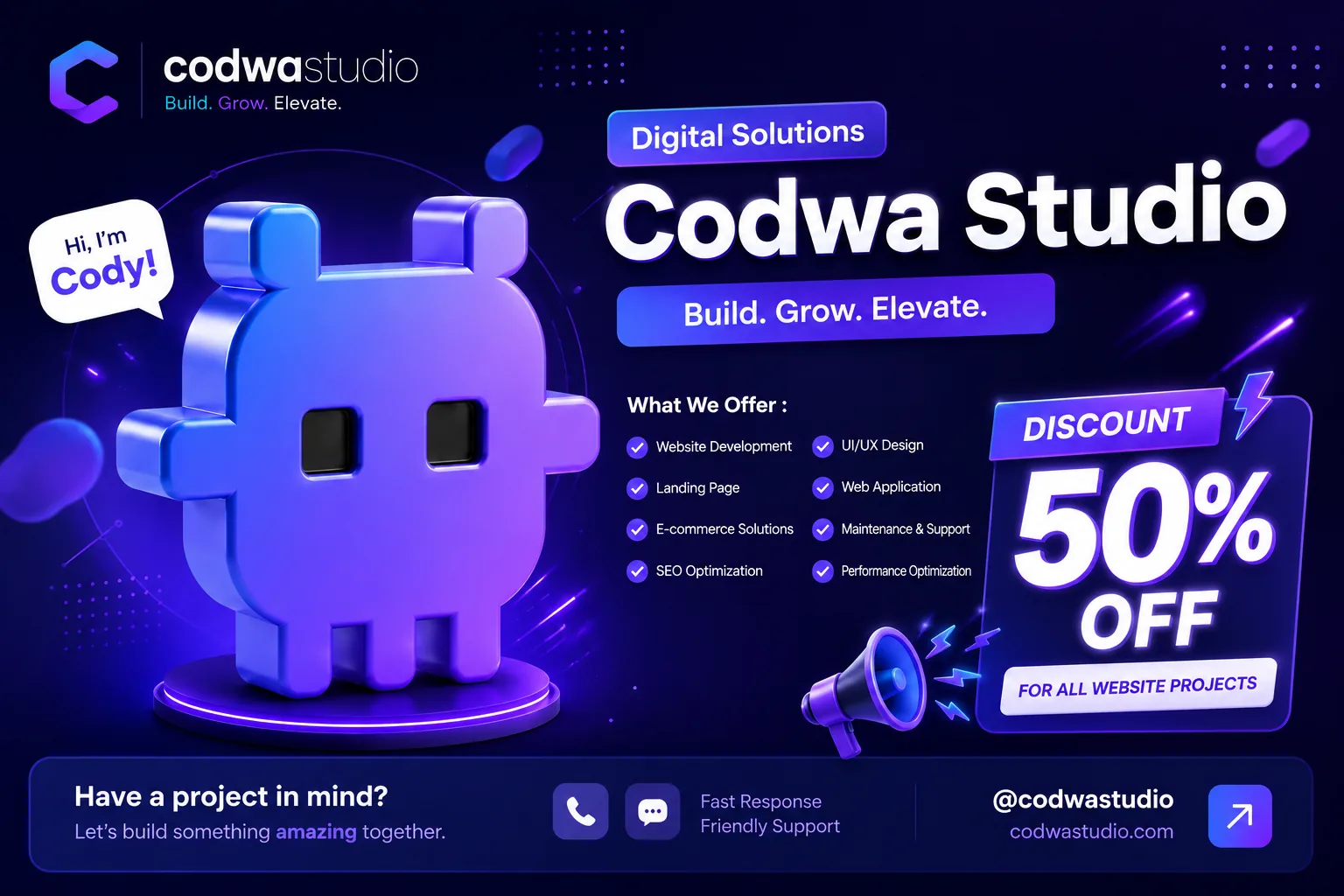
If one of the main channels you want to try is paid advertising, Codwa Studio's SEM (Search Engine Marketing) service can be a great starting point to reach potential customers in a measurable way that fits a small business budget.
As your audience grows, consider email marketing as a business channel for keeping in touch with people who have already shown interest.