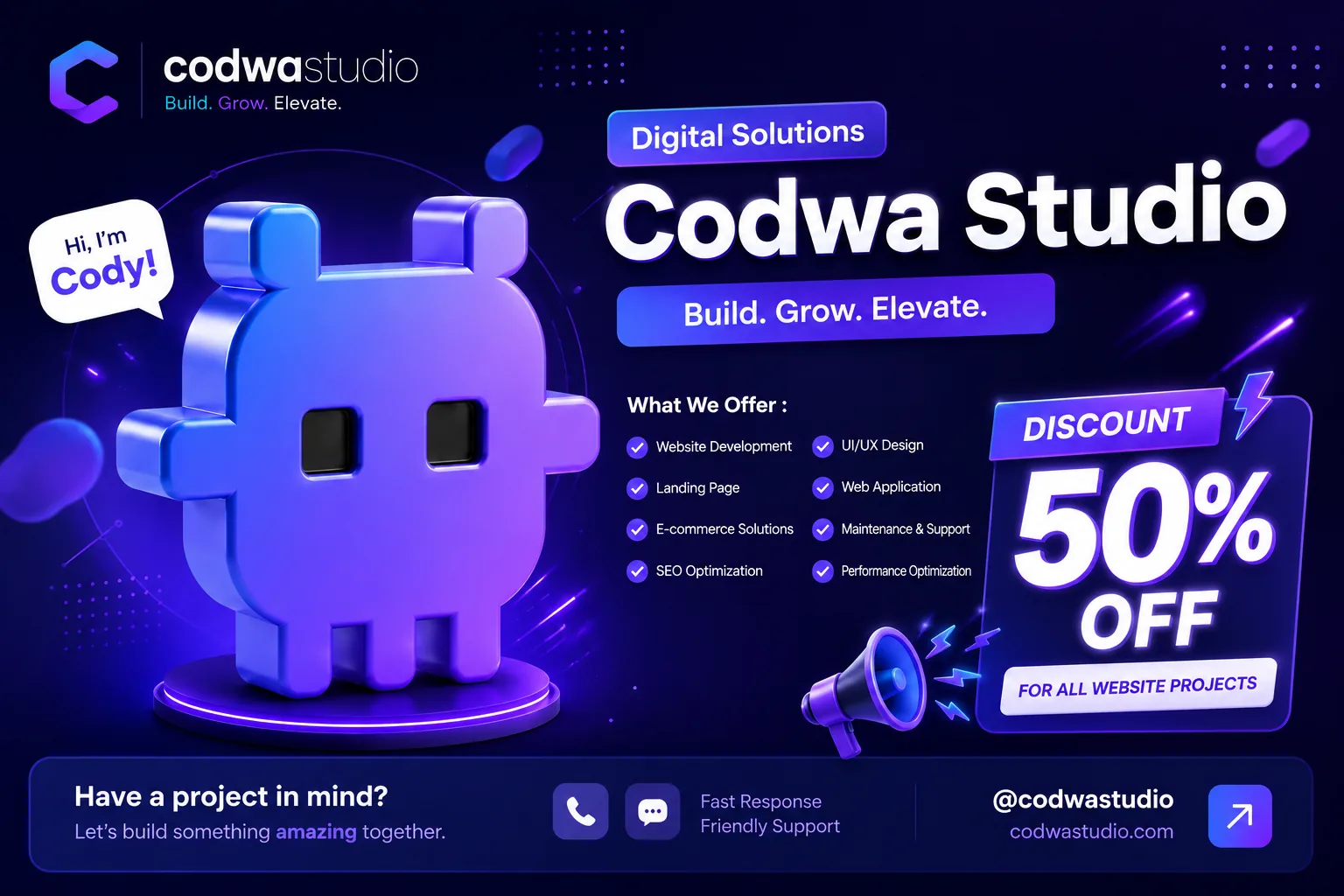
For many businesses, website is the first real interaction potential customers have with your brand. A modern website that is fast, mobile-friendly, secure, and easy to navigate can immediately build trust, while an outdated website often makes people leave before they understand what you actually offer.
In a digital-first landscape, your website is no longer just a marketing asset. It acts as a growth engine: attracting new visitors, turning them into leads or customers, and giving you data to continuously improve your results.
1. Building credibility and professional trust
A modern website with clean design, clear messaging, and consistent branding sends a signal that your business is serious and reliable. Your website becomes the place where you present your services, highlight testimonials and case studies, and tell a coherent brand story.
When visitors feel that your website is well-designed and kept up to date, they are more willing to believe that your business can deliver quality and keep its promises.
Use a clear value proposition at the top of your homepage.
Show social proof such as client logos, testimonials, and case studies.
Maintain consistent branding across colors, typography, and tone of voice.
2. Increasing visibility and reach
Without a strong online presence, it is difficult for potential customers to find you. A modern website that is search-engine-friendly and optimized for mobile allows more people to discover your business organically, whether they are browsing from a desktop at the office or a phone on the go.
Your website becomes the hub that connects all of your marketing channels — social media, email, and ads — to a single destination where people can learn about your brand and take the next step.
Invest in basic SEO: fast loading, clean markup, and relevant content.
Connect your website with your main social profiles and campaigns.
Make navigation to key pages like services and contact intuitive.
3. Generating qualified leads and sales 24/7
Unlike a physical store with limited hours, your website works around the clock. With clear calls-to-action, focused landing pages, and simple forms, a modern website can turn anonymous visitors into qualified leads or customers even when your team is offline.
When you treat your website as a digital salesperson and design each page around a specific goal, you create a scalable acquisition channel that supports long-term growth.
Design landing pages that speak directly to specific customer segments.
Offer lead magnets such as guides, checklists, or demos in exchange for contact information.
Integrate forms with your CRM or email tools for automatic follow-up.
4. Enabling data-driven decisions
A modern website provides valuable insight into visitor behavior. By tracking page views, click paths, and conversion rates, you can see which content works and where people tend to drop off.
Instead of guessing, you have real data to guide improvements to your messaging, design, and offers.
Use analytics tools to monitor traffic sources and popular pages.
Test different headlines, layouts, or CTAs and compare performance.
Identify friction points and redesign those sections to be clearer and more helpful.
5. Growing alongside your business
A modern website is built with scalability in mind. As your business grows — adding services, entering new markets, or targeting new segments — you can expand the website with new pages, content, and features without rebuilding everything from scratch.
This flexibility turns your website into a long-term asset that grows with your business.
Create dedicated pages for new offers or industries you serve.
Add a resources or insights section to share articles like this.
Integrate tools such as booking systems, client portals, or chat widgets when needed.
Conclusion: Treat your website as a growth engine
By investing in a modern website that is credible, discoverable, conversion-focused, mobile-friendly, and data-driven, you give your business a strong platform to grow and stand out in a competitive market.
Instead of seeing your website as "just a brochure", treat it as the heart of your digital strategy: the place where visitors can understand your brand, build trust, and take meaningful steps toward becoming long-term customers.
Want to build a modern website that reflects your business's credibility? Explore Codwa Studio's Company Profile Website services to see how our team can help bring it to life.